There is a quiet revolution underway in how nations think about energy. For most of the twentieth century, energy sovereignty meant controlling the physical sources of power — the oil wells, the coal seams, the uranium deposits. Nations that possessed these resources wielded geopolitical leverage; those that did not were perpetually vulnerable. The energy crises of the 1970s, the Gulf Wars, and the European gas shock of 2022 all followed the same structural logic: whoever controls the fuel controls the future.
That logic has not disappeared. But it has been joined — and in some respects superseded — by a new and more complex set of dependencies. The clean energy transition, which promised to liberate nations from fossil fuel geopolitics, has instead created a different set of chokepoints: the algorithms that manage increasingly complex grids, the data architectures that underpin real-time balancing decisions, and the critical minerals without which no solar panel, wind turbine, or battery storage system can be built. Energy sovereignty in 2026 is not simply about where your electrons come from. It is about who controls the intelligence that moves them.
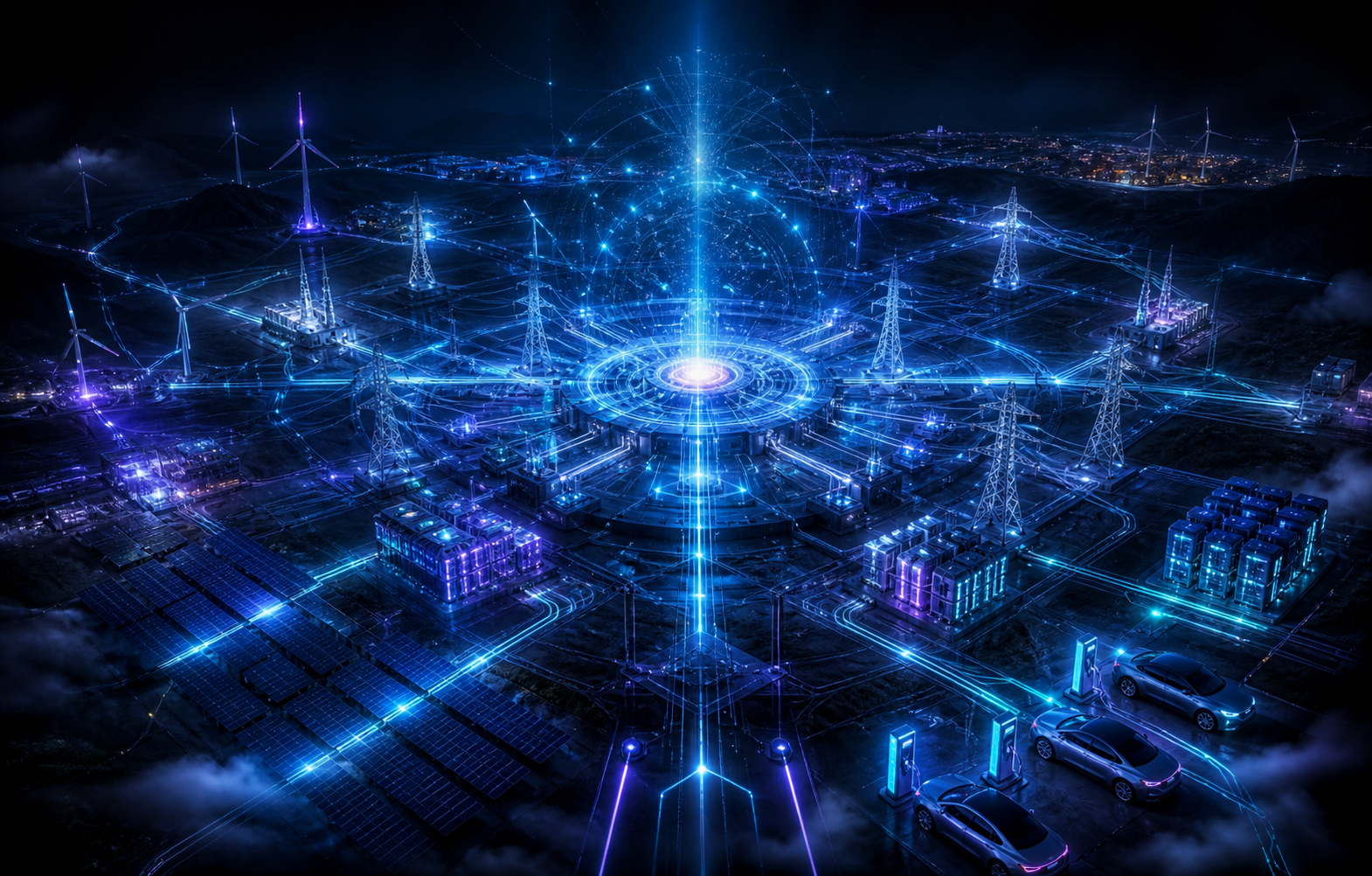
The grid is no longer merely a physical network of wires and transformers — it is a data system, an algorithmic system, and increasingly, a geopolitical system.
The Algorithmic Grid: A New Dependency
The European Commission's June 2026 Strategic Roadmap for Digitalisation and AI in the Energy Sector represents one of the most explicit acknowledgements yet that energy sovereignty and algorithmic sovereignty are inseparable. The document, released as part of the broader Tech Sovereignty Package, states plainly that true technology sovereignty requires an interconnected, digitised energy system where the EU retains control over the digital solutions, AI models, and algorithms that govern its grid. This is not rhetorical flourish — it is a recognition that the transition to renewable energy has fundamentally changed the nature of grid management.
A grid powered predominantly by fossil fuels is, in operational terms, relatively predictable. Gas turbines and coal plants can be ramped up or down in response to demand. The physics are well understood; the control systems are mature. A grid powered predominantly by wind and solar is a different beast entirely. Generation is intermittent, distributed, and weather-dependent. Demand is increasingly electrified — heating, transport, and industrial processes that once ran on gas or diesel now draw from the same network. The result is a system of extraordinary complexity, one that cannot be managed by human operators alone.
AI is not optional in this context — it is structurally necessary. The EU's AI.grids initiative, involving 48 partners including grid operators and research institutes, is developing sovereign EU-level AI models specifically designed for grid management. The UK's National Grid, through its Foundational Shared Model Operations (FoSMo) project, is pursuing collaborative AI architectures that allow multiple network operators to share standardised models for asset management and demand forecasting. The Lucy Yu Review, The Grid We Need Now, explicitly calls for "agentic" AI systems — autonomous agents capable of making near-real-time decisions within defined safety parameters — to create self-healing, reactive supply chains.
These are not incremental improvements to existing systems. They represent a fundamental shift in the locus of grid intelligence, from human operators following established protocols to algorithmic systems making consequential decisions at machine speed. And this shift creates a new category of strategic vulnerability: dependency on the vendors, architectures, and data governance frameworks that underpin those algorithms.
The Sovereignty Paradox
The International Energy Agency's September 2026 report, Modernising Grids in the Age of Electricity, identifies a tension that deserves more attention than it has received. AI offers transformative potential for grid efficiency, resilience, and forecasting. But it simultaneously introduces new strategic risks — institutional dependencies, vendor lock-in, and the potential loss of public-sector capability to understand, audit, or override the systems that keep the lights on.
The grid is no longer merely a physical network of wires and transformers — it is a data system, an algorithmic system, and increasingly, a geopolitical system.
The Shared AI Governance for Energy Systems (SAGES) framework, published in June 2026, is particularly direct on this point. It warns that poorly governed AI can erode national sovereignty, and proposes an assurance architecture to ensure that international cooperation supports national ownership rather than transferring decision rights away from states. The concern is not hypothetical. When a grid operator's balancing decisions are made by a proprietary algorithm running on a foreign cloud platform, the question of who actually controls the grid becomes genuinely ambiguous.
Twenty-four per cent of global energy leaders now cite the protection of national energy sovereignty as a critical AI governance concern — a figure that would have seemed extraordinary a decade ago.
The ADNOC Powering Possible 2026 report, drawing on surveys of global energy leaders, found that 24 per cent of respondents specifically cite the protection of national energy sovereignty as a critical AI governance concern. Security and system reliability ranked first (53 per cent), followed by transparency (44 per cent). These are not abstract philosophical preferences — they reflect hard-won operational experience with the risks of algorithmic opacity in critical infrastructure.
The SAGES framework identifies the primary risks of AI in energy planning as institutional rather than purely technical. Weak traceability, data-governance failures, and reliance on opaque model authorities are the real threats to national energy security. A grid operator that cannot explain why its AI system made a particular balancing decision — or that cannot override that decision in an emergency — has not achieved operational sovereignty. It has achieved operational dependency with a renewable energy aesthetic.
The Mineral Chokepoint
If the algorithmic dimension of energy sovereignty is underappreciated, the mineral dimension is at least better understood — though the policy responses remain inadequate to the scale of the challenge. The clean energy transition requires enormous quantities of lithium, cobalt, nickel, manganese, rare earth elements, and a range of strategic minor minerals. These materials are not evenly distributed across the planet, and their processing is even more concentrated than their extraction.
China controls between 60 and 80 per cent of final global supply for processed critical minerals, according to the Boston Consulting Group's October 2026 analysis. This is not a theoretical vulnerability — it is an active economic security challenge. China's implementation of export controls on gallium, germanium, and graphite has demonstrated that mineral leverage can be deployed as a geopolitical instrument with immediate effect on supply chains for semiconductors, batteries, and defence technologies alike.
The IEA's Global Critical Minerals Outlook 2026 documents a troubling dynamic: investment in critical mineral extraction declined by 9 per cent in 2025, even as demand projections continued to rise. Price volatility, geopolitical tensions, and the concentration of refining capacity in a small number of jurisdictions have combined to create a structural fragility in the supply chains that the energy transition depends upon. Strategic minor minerals — tungsten, indium, tellurium — experienced extreme price surges in early 2026 as export restrictions tightened.
The policy responses from major economies have been energetic but insufficient. The United States' $12 billion Project Vault initiative to build strategic stockpiles, the February 2026 Critical Minerals Ministerial, and the EU's Global Gateway partnerships all represent genuine efforts to diversify supply chains. But they face a fundamental structural problem: the gap between mining (upstream) and refining/processing (midstream) capacity cannot be closed quickly. New mines take a decade or more to develop; refining infrastructure takes years to build and requires specialised expertise that is currently concentrated in China.
The Data Centre Complication
Twenty-four per cent of global energy leaders now cite the protection of national energy sovereignty as a critical AI governance concern — a figure that would have seemed extraordinary a decade ago.
There is a further dimension to the energy sovereignty question that is rarely addressed with sufficient candour: the energy demands of AI itself. The EU's Strategic Roadmap projects that data centre demand will grow from 12 GW in 2025 to 28 GW by 2030. The ADNOC report suggests global data centre electricity consumption could reach 950 TWh by 2030. These are not marginal additions to grid load — they represent a structural shift in the demand profile of electricity systems that are simultaneously trying to integrate more intermittent renewable generation.
The irony is acute. The AI systems that are supposed to make grids smarter and more efficient are themselves placing unprecedented demands on those grids. The EU's Capacitypedia initiative — a tool designed to guide data centre development toward regions with sufficient grid capacity — is an acknowledgement that this tension is real and requires active management. But it also illustrates the degree to which energy sovereignty now requires governance of the digital economy, not just the physical energy system.
A nation that attracts large-scale AI infrastructure investment without adequate grid planning may find that its energy sovereignty is compromised not by foreign adversaries but by the domestic consequences of its own digital ambitions. The grid capacity that was supposed to power the clean energy transition is being consumed by the data centres that power the AI systems that are supposed to manage that transition. This is not a paradox that resolves itself through market mechanisms alone.
What Genuine Energy Sovereignty Requires
The analysis above points toward a set of requirements for genuine energy sovereignty in the intelligence era that go well beyond the conventional focus on generation mix and import dependency. Four dimensions deserve particular attention.
Algorithmic Sovereignty
Nations and grid operators must retain the capacity to understand, audit, and override the AI systems that manage their infrastructure. This means investing in sovereign AI capabilities — not necessarily building every model from scratch, but ensuring that the algorithms making consequential grid decisions are transparent, auditable, and subject to meaningful human oversight. The EU's AI.grids initiative and the UK's FoSMo project represent steps in this direction, but they need to be accompanied by governance frameworks that specify what algorithmic transparency means in operational terms.
The SAGES framework's call for an assurance architecture — one that ensures international cooperation supports national ownership rather than transferring decision rights — provides a useful template. Grid operators should be able to answer, at any time, why their AI system made a particular decision, what data it used, and how that decision can be overridden if necessary. Anything less is not sovereignty; it is managed dependency.
Data Sovereignty
Grid AI systems are only as good as the data they are trained on and operate with. Cross-border energy data exchange, which the EU's Strategic Roadmap identifies as a priority for 2027, is essential for the kind of system-level optimisation that modern grids require. But it must be governed by frameworks that preserve national control over sensitive infrastructure data. The EU's Data Governance Act and Data Act provide a partial framework, but their application to energy system data — which has national security implications that go beyond ordinary commercial data — requires specific attention.
A nation that cannot control the algorithms managing its grid has not achieved energy independence — it has merely outsourced its dependency from oil exporters to algorithm vendors.
Mineral Supply Chain Resilience
The critical minerals challenge requires a generational investment in supply chain diversification that goes beyond stockpiling and diplomatic partnerships. Resource-rich nations in Africa and the Global South are increasingly demanding domestic processing rather than raw material exports — a shift exemplified by the Democratic Republic of the Congo's recent export quotas on cobalt. This is a legitimate assertion of sovereign economic rights, and it will reshape the economics of critical mineral supply chains over the coming decade.
For energy-importing nations, the implication is clear: the transition from fossil fuel dependency to clean energy dependency is not a transition to energy independence. It is a transition to a different set of dependencies, with different geopolitical characteristics. Managing those dependencies requires the same strategic seriousness that was applied to oil security in the twentieth century.
Demand Governance
The energy demands of AI infrastructure must be treated as a strategic variable, not an exogenous given. Nations that are serious about energy sovereignty need to develop frameworks for governing where AI infrastructure is located, how it is powered, and what obligations it carries toward the grid systems it depends upon. This is not anti-innovation — it is the kind of strategic planning that distinguishes nations that shape their technological futures from those that are shaped by them.
A nation that cannot control the algorithms managing its grid has not achieved energy independence — it has merely outsourced its dependency from oil exporters to algorithm vendors.
The Deeper Point
The energy sovereignty debate has, for too long, been conducted in the language of the twentieth century — barrels of oil, cubic metres of gas, tonnes of coal. The clean energy transition has disrupted that language without fully replacing it. We now need a vocabulary adequate to the intelligence era: one that encompasses algorithmic sovereignty, data governance, mineral supply chain resilience, and the governance of AI infrastructure's energy demands.
The European Commission's Tech Sovereignty Package, the UK's agentic grid management strategy, and the various critical minerals initiatives represent genuine progress. But they remain fragmented — addressing different dimensions of the same underlying challenge without a unified framework that treats energy sovereignty as the integrated problem it has become.
The grid is the new border. It is the infrastructure through which modern economies function, through which the clean energy transition will succeed or fail, and through which the intelligence era will be powered. Nations that govern it as sovereign territory — attending to its physical, algorithmic, data, and mineral dimensions with equal seriousness — will be positioned to exercise genuine strategic autonomy in the decades ahead. Those that treat any of these dimensions as a technical detail, best left to markets or vendors, will find that their energy independence is more nominal than real.
The question is not whether to take energy sovereignty seriously. The question is whether the governance frameworks being built today are adequate to the full complexity of what energy sovereignty now means. On current evidence, the answer is: not yet.